
British Traditions of Harvest Festival: A Complete Local Guide
The british traditions of harvest festival stretch back well beyond the Victorian church service most people picture today. Understanding the british traditions of harvest festival means looking at three overlapping layers: the pre-Christian first-fruits customs of Lammas, the medieval parish tithe, and the thanksgiving service formalised by Reverend Robert Hawker at Morwenstow in Cornwall in 1843. Across market towns and suburban parishes, the pattern still runs on a September-to-October calendar, tied to the last sheaf rather than to a fixed date in the diary. A typical village celebration now combines a Sunday service, a produce auction that raises between £200 and £900 for a local food bank, a supper in the village hall priced at roughly £6 to £12 a head, and a fair on the green the following afternoon. This guide breaks down each custom, what it costs to run, and how communities keep it alive.
Where the British Traditions of Harvest Festival Began
Long before parish churches held autumn services, the agricultural year turned on Lammas, celebrated on 1 August, when a loaf baked from the first cut wheat was brought for blessing. That first-fruits offering set the template that everything else follows: give back a portion of what the land produced, then eat together as a community.
The modern shape dates to 1843, when Robert Hawker invited his Morwenstow parishioners to a harvest thanksgiving with bread made from new corn. Victorian hymn writers supplied the soundtrack, and Come Ye Thankful People Come and We Plough the Fields and Scatter became fixtures within a single generation across England and Wales.
Scotland kept its own name and its own calendar. The Kirn, or Harvest Home, ran later in the season and centred on the farm rather than the church, with the farmer standing a supper for everyone who had worked the fields. British traditions of harvest festival therefore vary sharply by county, not merely by denomination or parish size.
The Harvest Service, the Loaf and the Produce Display
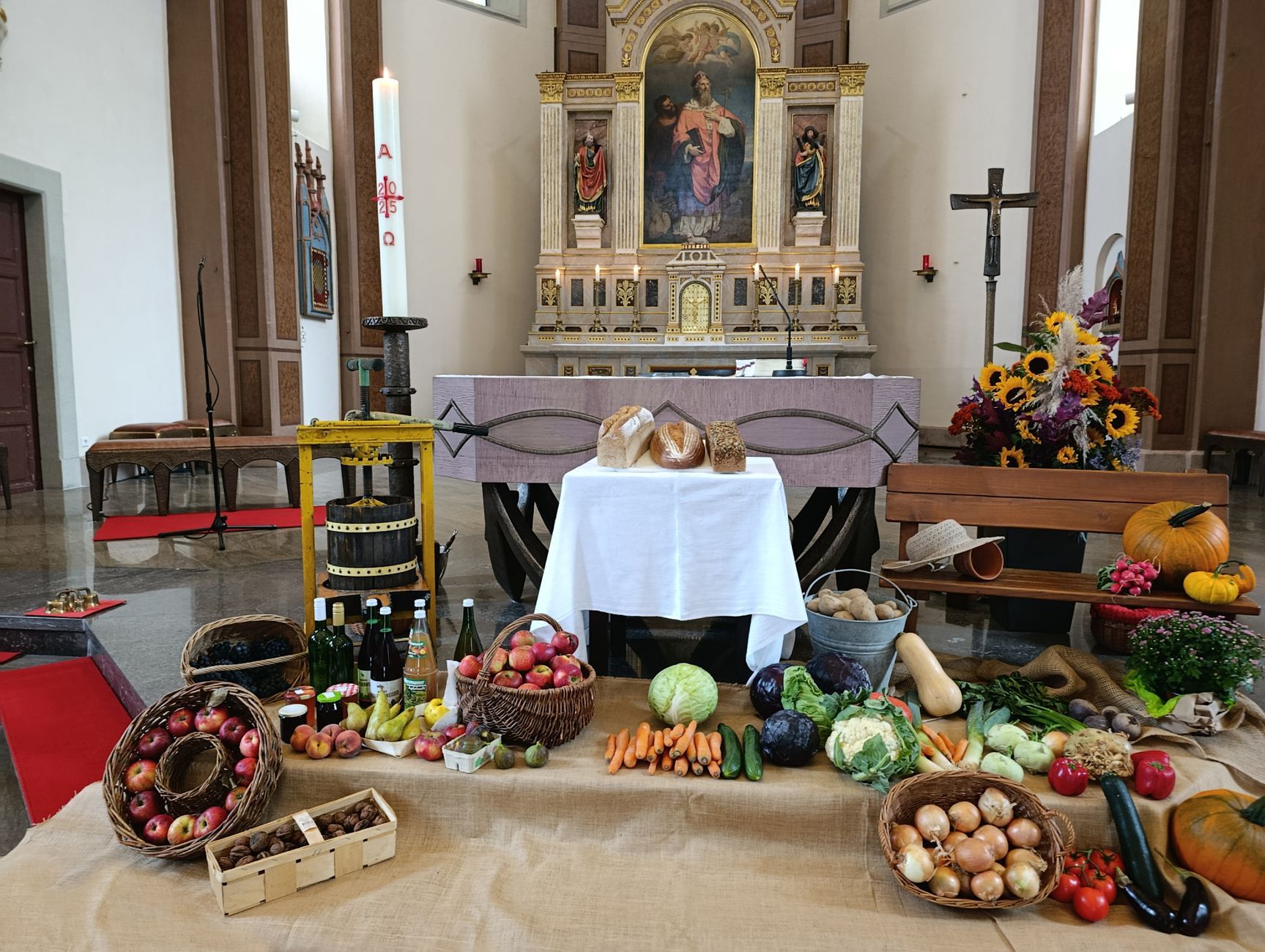
A standard parish service runs 45 to 60 minutes and centres on a display of donated produce arranged along the chancel steps. Marrows, apples, jars of chutney and tinned goods sit together, and the mix has shifted decisively toward long-life items that food banks can actually redistribute within their normal stock rotation.
Church volunteers usually set a collection target before the day. A parish of 120 regular attenders will commonly gather 200 to 400 items plus a cash collection of £150 to £400. Schools mirror the format with an assembly, and most primary schools still run one during the final week of September.
Music matters more than decoration. Three hymns, a reading from Deuteronomy or the parable of the sower, and a short address form the standard order of service. Anything longer loses the families who came mainly for the supper afterwards, which is the part most children actually remember years later.
The Wheatsheaf Loaf and What It Symbolises
The centrepiece is a wheatsheaf loaf, baked from a stiff dough so the plaited stalks hold their shape through the service. A commercial bakery charges roughly £25 to £45 for one, and a competent home baker needs about 1.5kg of strong white flour and four hours including proving, shaping and baking.
The mouse tucked at the base of the sheaf is a baker’s joke that hardened into convention. Because the loaf is decorative rather than edible after a day on display, many parishes now bake a second batch of plain rolls as well, so nothing is wasted at the supper that evening.
Corn Dollies, the Last Sheaf and Regional Rituals
The last sheaf cut in a field was believed to carry the spirit of the harvest, so it was never simply threshed with the rest. It was plaited into a corn dolly and kept indoors until spring, then ploughed back into the first furrow. Different counties developed distinct shapes and knots.
Crying the Neck in Cornwall and Devon involved the reapers shouting over the final handful of corn as the cutting ended. In Yorkshire the Mell Doll took a broader, flatter form. These customs ran alongside church services rather than competing with them, which is why so many survived the Victorian reorganisation intact.
Ploughing matches, still held every autumn across East Anglia and the Borders, are the working end of the same tradition. Entry fees sit around £15 to £30 per class, and the events double as the point where farming families settle the season, compare yields and argue about drilling dates face to face.
| Region | Custom | Typical timing | Distinctive feature |
|---|---|---|---|
| Cornwall and Devon | Crying the Neck | Late August to September | Reapers shout over the final handful of corn |
| Yorkshire | Mell Supper and Mell Doll | September | Flat, broad corn dolly kept indoors until spring |
| East Anglia | Horkey supper and ploughing match | Late September | Farm-hosted supper followed by competitive ploughing |
| Scotland | The Kirn or Harvest Home | October | Farmer stands supper for all field workers, with fiddle and dancing |
| Wales | Diolchgarwch chapel service | Late September to October | Bilingual thanksgiving, often on a weekday evening |
The Village Fair, the Notice Board and Animal Traditions
The fair on the green is where the parish becomes a marketplace again for a single afternoon. Stalls charge £10 to £25 for a pitch, tombola tickets go at 50p, and the produce auction held after the service regularly clears more money than the church collection itself.
Animals have always been part of it. Blessing of the animals services, held close to harvest in many rural benefices, bring working collies, ponies and household pets into the churchyard, while the fair’s novelty dog classes draw everything from farm terriers to the squat, broad-chested type that a british bulldog puppy for sale near me listing would describe.
The village hall notice board carries the other half of parish life, and the classified mix has changed less over the decades than people assume. Pinned between the supper tickets and the bell-ringing rota, a September board in most English villages will typically hold the following:
- Ploughing match entry forms, £15 per class, closing two weeks before the event
- A handwritten card offering a french bulldog puppy for sale, usually with a mobile number and no photograph
- Requests for clean jam jars, tombola prizes and raffle donations for the harvest supper
- Adverts from neighbouring villages, including the occasional puppy french bulldog for sale posted after a late-summer litter
- Parish council notices about verge cutting, footpath closures and the autumn litter pick
Harvest weekend is also, quietly, one of the busiest points in the rural classifieds year. Late-summer litters come of age around the same time, which is why a puppy for sale french bulldog card and a search for english bulldog puppy for sale near me both peak through September. The fair simply moves that trade into daylight.
Prices deserve scrutiny before anyone commits at a stall or a gate. A french bulldog puppy price uk typically ranges from £1,500 to £3,500 depending on health testing and Kennel Club registration, while a blue french bulldog puppy for sale often carries a premium of several hundred pounds for coat colour alone. A responsible seller always shows the dam with the litter.
Local demand also shows up in the exact phrasing people use. Anyone typing french bulldog puppy for sale uk or puppy french bulldog for sale uk is usually shopping nationally, whereas puppy bulldog for sale near me and american bulldog puppy for sale near me signal someone who intends to visit in person. A mini bulldog puppy for sale advert needs identical checks on breathing and paperwork.
Running a Harvest Celebration: Real Costs and Practicalities
A village hall harvest supper for 80 people costs roughly £320 to £560 to put on before any ticket income arrives. Hall hire runs £12 to £25 an hour, a hog roast for that number sits near £450, and a bring-a-dish model cuts the food line down to almost nothing at all.
Insurance is the item committees consistently forget. Public liability cover for a one-day parish event costs £60 to £120, and any raffle with tickets sold only on the day counts as an incidental lottery, which stays exempt from licensing provided the draw happens at the event itself.
Volunteer numbers decide everything else. Twelve people can run a service, a supper and a small fair comfortably; eight cannot. Build the rota six weeks out, name a single coordinator, and confirm the produce auction lot list the week before so donations arrive sorted rather than in unlabelled bin bags.
A Realistic Timeline for Parish Committees
Start in early July. Book the hall and the caterer, then approach the school during the first week of term so that the assembly and the parish service reinforce one another. Publicity four weeks out through the parish magazine and two village noticeboards is enough for most communities of that size.
The british traditions of harvest festival survive because the workload is shared and visible. When one person carries an entire event, it lasts about three years and then stops. When a committee of six splits produce, catering, music and fundraising between them, parishes routinely run the same format for decades.
How do British traditions of harvest festival differ between England and Scotland?
The English pattern is parish-led and church-centred, fixed loosely to the Sunday nearest the Harvest Moon, with a produce display, a wheatsheaf loaf and a collection for a named food bank. Scotland’s Kirn, or Harvest Home, grew out of the farm rather than the kirk. The farmer hosted a supper for everyone who had worked the ground, with fiddle music, dancing and the last sheaf plaited and hung in the farmhouse kitchen. Presbyterian tradition historically resisted fixed festival calendars, so Scottish congregations adopted formal harvest thanksgiving services later and far less uniformly than English ones. Wales sits closer to the English model but keeps chapel-based Diolchgarwch services, often bilingual and frequently held on a weekday evening.
Is a harvest festival still held in most UK schools?
Yes. The harvest assembly remains one of the most widely kept observances in UK primary schools, typically held in the last two weeks of September or the first week of October. The format is consistent: children bring tinned and packet food, sing two or three harvest songs, and hear a short talk about where food actually comes from. Most schools now partner with a named local food bank and publish a wanted list, because tinned tomatoes, long-life milk, rice and tinned meat are far more useful than a wheelbarrow of marrows. A class of thirty commonly contributes 60 to 90 items. Secondary schools mark it less often, usually folding it into a wider autumn charity week.
What should a family bring to a harvest festival service?
Bring long-life food rather than garden produce, unless the parish has specifically asked for fresh items. Tinned vegetables, pasta, rice, UHT milk, tinned fish, coffee and toiletries all pass food bank stock checks; homegrown courgettes and windfall apples usually go into the produce auction instead, where they raise cash rather than sit unclaimed. Carry cash for that auction, since many village halls still have no card reader, and £10 to £20 comfortably covers a lot plus supper tickets. Children can bring a decorated box or small basket, which schools frequently request in advance. If a blessing of the animals service follows, keep dogs leashed and check with the churchwarden first, because not every churchyard permits them inside the building.